Quick Facts
Basic Information
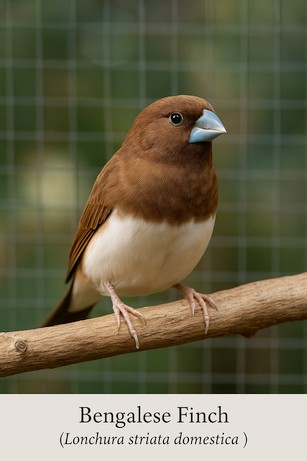
- Scientific Name: Lonchura striata domestica
- Average Lifespan: 4-7 years (can be up to 10)
- Size: 10-11 cm (4-4.5 inches)
- Weight: Approx. 15 grams
- Colors: Various combinations of white, brown (chocolate, fawn, chestnut, red-brown), tan. Can be pied or crested.
Care Requirements
- Cage Size: Minimum 76cm L x 45cm W x 45cm H for a pair; longer is better. Bar spacing 1/2 inch or smaller.
- Temperature Range: 18-25°C (64-77°F)
- Diet: Finch seed mix or pellets, fresh greens, sprouts, egg food, occasional millet/fruit.
- Social Needs: Highly social; must be kept in pairs or small groups.
Costs (NZ$)
- Purchase Price: $20-50 (estimate)
- Monthly Care: $10-20 (estimate)
- Initial Setup: $80-150 (estimate)
Image Gallery
Detailed Information
Characteristics & Personality
Bengalese Finches, also known as Society Finches, are friendly, peaceful, and highly social birds. They are a domesticated species and do not exist in the wild. Known for their active and curious nature, they are entertaining to watch. While not typically hand-tamed, they can become accustomed to their owners. Males have a pleasant song, and these finches are renowned for being excellent foster parents to other finch species.
Positive Traits
- Low maintenance
- Relatively quiet with pleasant vocalizations
- Good for beginners and apartment living
- Can cohabitate peacefully with other passive finches
- Excellent foster parents
Challenges
- Not suited for handling
- Prone to air-sac mites, especially if stressed
- Require regular cage cleaning to maintain hygiene
Care Guide
Housing Requirements
Provide a spacious cage, prioritizing length for flight, with bar spacing no more than 1/2 inch. Include perches of varying diameters (natural branches are good) and a shallow dish for bathing. Bengalese Finches enjoy sleeping in nests, so provide a wicker or similar finch nest even if you are not planning to breed them.
Diet & Nutrition
A base of high-quality finch seed mix or pellets is essential. Supplement daily with fresh greens like spinach, dandelion leaves, or chickweed, and provide sprouts. Egg food (commercial or homemade from boiled egg) is beneficial, especially if breeding. Offer millet spray and small amounts of fruit as occasional treats. Always ensure fresh, clean water is available.
Health & Wellness
These finches are generally robust but can be susceptible to air-sac mites, particularly when stressed by overcrowding or poor conditions. Scaly face mites can also occur. Maintaining a clean cage, providing a balanced diet, and avoiding stress are key to their health. Regular observation for any signs of illness (lethargy, fluffed feathers, changes in droppings) is important.
Training & Intelligence
Bengalese Finches are not trained for tricks or extensive interaction. Their charm lies in their natural behaviors and social dynamics within a group.
Training Difficulty
Low - Best enjoyed for their activity and song rather than direct interaction or training.
Song & Vocalizations
Males sing a pleasant, varied song composed of chirps, trills, and whistles. Females typically make quieter chirping sounds. They are not loud birds, making them suitable for various home environments.
Buying Guide
Best Time to Buy
Spring and early summer are generally good times, as birds are often more active and readily available from breeders.
Where to Buy in Christchurch
- Christchurch Bird Club members (recommended for healthy, well-socialized birds)
- Reputable pet stores specializing in birds
- Registered local breeders
What to Look For
- Bright, clear eyes
- Clean, smooth feathers (no signs of plucking or mites)
- Active and alert behavior
- Clean vent area
- Bird should not be overly fluffed or lethargic
Is This Bird Right For You?
Ideal Owner Profile
Bengalese Finches are perfect for individuals or families who appreciate watching lively, social birds interact. They are an excellent choice for first-time bird owners, those living in apartments, or anyone looking for a relatively low-maintenance avian pet.
Lifestyle Considerations
- Enjoys observing bird behavior rather than seeking a hands-on pet
- Able to provide a clean, safe, and stimulating environment
- Understands the need for companionship (will keep at least a pair)
- Can commit to daily feeding, water changes, and regular cage cleaning
- Prepared for a commitment of 4-7 years, potentially longer