Quick Facts
Basic Information
- Scientific Name: Psittacus erithacus
- Common Subspecies: Congo African Grey (CAG), Timneh African Grey (TAG)
- Average Lifespan: 40-60 years (or more)
- Size (CAG): Approx. 33 cm (13 inches)
- Weight (CAG): Approx. 400-500 grams
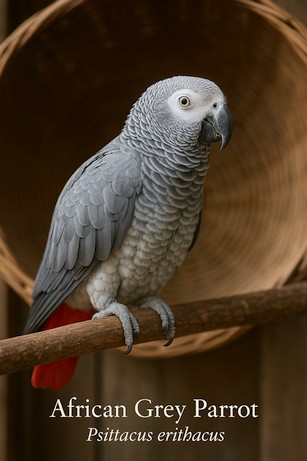
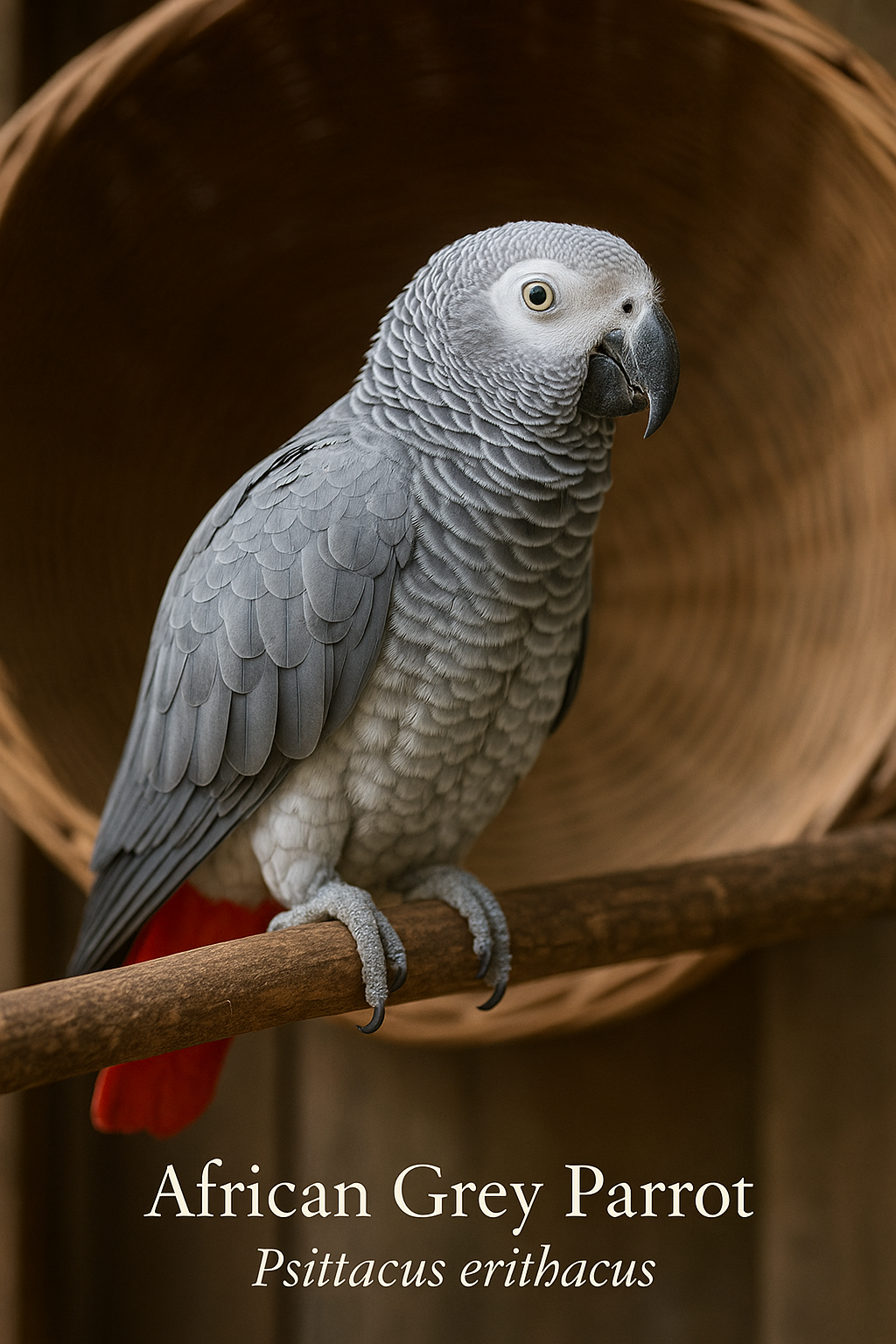
- Appearance (CAG): Predominantly grey feathers, bright red tail, black beak. (Timnehs are smaller, darker grey, with maroon tail and horn-colored upper beak).
Care Requirements
- Cage Size: Large (e.g., min. 90cm W x 60cm D x 120cm H for CAG). Bigger is better.
- Temperature Range: Room temperature (18-25°C). Sensitive to drafts.
- Diet: High-quality pellets, supplemented with fresh fruits, vegetables (esp. leafy greens, beta-carotene rich), and some healthy seeds. Calcium-rich foods important.
- Social Needs: Extremely high; requires several hours of daily interaction and mental stimulation.
Costs (NZ$)
- Purchase Price: $2500 - $5000+ (estimate)
- Monthly Care: $60 - $120+ (quality food, toys)
- Initial Setup: $600 - $1200+ (large cage, enrichment, vet check)
Image Gallery
Detailed Information
Characteristics & Personality
African Grey Parrots are legendary for their extraordinary intelligence, often likened to that of a young human child. They are highly social birds that can form deep, affectionate bonds with their owners, though they are not always overtly cuddly. Greys are keen observers, sensitive, and can be cautious with new people or situations. Without adequate socialization, they may become "one-person" birds. Their intelligence means they require constant mental stimulation; a bored African Grey can develop behavioral issues. There are two common subspecies: the larger Congo African Grey with its bright red tail, and the smaller Timneh African Grey with a darker, maroon tail and a horn-colored upper beak.
Positive Traits
- Exceptional intelligence and problem-solving abilities
- Unparalleled talking ability, capable of understanding context
- Can form very strong, loyal bonds with their humans
- Long lifespan, offering many years of companionship
- Engaging and interactive personalities
Challenges
- Extremely high need for daily social interaction and mental engagement (several hours)
- Prone to stress, boredom, and behavioral problems like feather plucking if needs aren't met
- Can be demanding and may become one-person birds without proper socialization
- Sensitive to changes in routine and environment
- Requires a significant long-term commitment (40-60+ years)
- Can be noisy if distressed or seeking attention
Care Guide
Housing Requirements
A large, robust cage is essential. For a Congo African Grey, a minimum of 90cm W x 60cm D x 120cm H is recommended, but the bigger, the better, to allow for movement and toy placement. Bar spacing should be appropriate (around 3/4 to 1 inch). The cage should be placed in a social area of the home but not in constant direct sunlight or drafts. Provide a variety of perches (natural branches preferred) of different diameters and textures. A play gym for out-of-cage time is also vital.
Diet & Nutrition
A varied diet is crucial. Start with a base of high-quality formulated pellets (around 60-70% of the diet). Supplement daily with a wide array of fresh vegetables (especially dark leafy greens like kale, spinach, and beta-carotene rich options like cooked sweet potato and carrots) and fruits (e.g., berries, melon, mango, pomegranate). African Greys are prone to calcium deficiency, so include calcium-rich foods. A small amount of healthy seeds and nuts can be given as treats. Fresh, clean water must always be available. Avoid avocado, chocolate, alcohol, and caffeine.
Health & Wellness
Due to their high intelligence and sensitivity, African Greys are prone to stress-related feather picking if their social and mental stimulation needs are not met. They are also susceptible to calcium deficiency, Vitamin A and D deficiencies, respiratory issues, PBFD, and Aspergillosis. Regular mental enrichment, a proper diet, a clean environment, and opportunities for exercise are key to their well-being. Annual check-ups with an avian veterinarian are highly recommended.
Training & Intelligence
African Greys are considered one of the most intelligent bird species, capable of not just mimicking speech but understanding and using language in context. They can learn an extensive vocabulary and complex tasks. Training should be based on positive reinforcement and consistency. They thrive on learning and problem-solving activities. Their intelligence also means they can be easily bored, so ongoing training and new challenges are important throughout their lives.
Training Difficulty
Moderate to High - Their intelligence is a huge asset, but they require a dedicated and patient trainer. They learn quickly, including undesirable behaviors if not guided correctly. Early socialization and training are vital.
Speech & Vocalizations
African Greys are famous for their talking ability. Many learn to speak with remarkable clarity and can mimic a vast range of sounds, often using them appropriately. While not always the loudest parrots, they can produce loud calls if they are unhappy, seeking attention, or excited.
Buying Guide
Best Time to Buy
Acquiring a young, hand-reared, and well-socialized African Grey from a reputable breeder is crucial. Potential owners must be fully prepared for the profound commitment involved before bringing one home.
Where to Buy in Christchurch
- Seek out established, ethical avian breeders who specialize in African Greys and prioritize health, temperament, and early socialization.
- The Christchurch Bird Club may provide referrals to reputable breeders.
- Ensure the breeder can provide health records and information about the bird's parentage and upbringing.
- Avoid impulse buys; this is a lifelong companion.
What to Look For
- Bright, clear eyes, and clean nares (nostrils).
- Smooth, well-groomed feathers with no signs of plucking, stress bars, or discoloration.
- An active, alert, and inquisitive demeanor. The bird should not be overly fearful or aggressive.
- Healthy appetite and normal droppings.
- Evidence of a clean and stimulating environment at the breeder's facility.
Is This Bird Right For You?
Ideal Owner Profile
The African Grey is not a bird for the casual owner. They are best suited for experienced parrot owners or exceptionally dedicated individuals who have thoroughly researched their needs and are prepared for a highly demanding, lifelong companion. The ideal owner has significant time to dedicate daily to interaction, training, and care. They must be patient, understanding of complex avian behavior, and able to provide a stable, enriching environment.
Lifestyle Considerations
- A commitment of 40-60+ years. This is a companion for life.
- Several hours PER DAY required for direct interaction, training, and out-of-cage time.
- Ability to provide a very large, safe, and stimulating cage environment plus play areas.
- Financial resources for high-quality food, ongoing toy replacement, large cage, and specialized avian veterinary care (which can be expensive).
- A stable home environment. African Greys are sensitive to major changes.
- Tolerance for some noise, as they can be vocal.
- Patience and dedication to ongoing socialization to prevent them from becoming fixated on one person.
- Not suitable for households where they will be left alone for long periods regularly.