Quick Facts
Basic Information
- Scientific Name: Psittacula eupatria
- Average Lifespan: 25-40 years
- Size: 56-62 cm (22-24 inches)
- Weight: 200-300 grams
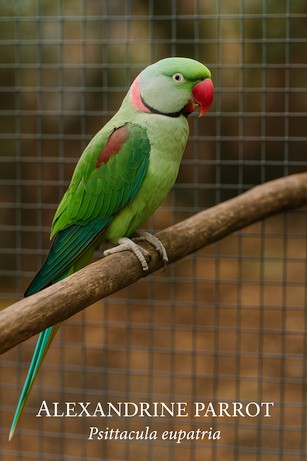
- Colors: Green body, maroon shoulder patch, black stripe on lower cheeks, red beak. Males have black and pink neck rings.
Care Requirements
- Cage Size: Min. 120cm L x 90cm W x 90cm H. Bar spacing max 1.5 inches.
- Temperature Range: Room temperature (18-25°C).
- Diet: Pellets (40%), fresh fruit/veg (40%), seeds/nuts (20%).
- Social Needs: Highly social, needs daily interaction and mental stimulation.
Costs (NZ$)
- Purchase Price: $800 - $1,500 (estimate)
- Monthly Care: $50 - $100 (estimate)
- Initial Setup: $500 - $1,000 (estimate)
Image Gallery
Detailed Information
History & Origin
The Alexandrine Parrot is named after Alexander the Great, who is believed to have brought these birds to Europe from India. They are native to South and Southeast Asia, including India, Pakistan, and Sri Lanka. These majestic parrots have been kept as pets for centuries due to their beauty and intelligence.
Personality & Behavior
Alexandrine Parrots are known for their gentle and affectionate nature. They are intelligent birds that can learn to speak and perform tricks. They form strong bonds with their owners and enjoy being part of family activities. These parrots are generally quieter than other large parrot species but can still be quite vocal, especially during dawn and dusk.
Care & Housing
Due to their large size, Alexandrine Parrots require spacious cages and plenty of out-of-cage time. They need a variety of perches and toys to keep them mentally stimulated. Regular exercise is important for their physical and mental well-being. Their diet should be varied and include high-quality pellets, fresh fruits and vegetables, and a moderate amount of seeds and nuts.
Health & Common Issues
Common health issues include respiratory problems, feather plucking, and obesity. Regular veterinary check-ups are essential. Signs of good health include bright eyes, clean feathers, and active behavior. Maintain a clean environment and provide fresh food and water daily to prevent health issues.
Training & Socialization
Alexandrine Parrots are highly trainable and can learn various commands and tricks. Start training early with positive reinforcement. They need daily social interaction and mental stimulation. These birds can learn to speak and mimic sounds, though their vocabulary may be more limited compared to some other parrot species.