Quick Facts
Basic Information
- Scientific Name: Cacatuidae family (many species)
- Average Lifespan: 40-70+ years (species dependent)
- Size: 30-60+ cm (12-24+ inches)
- Weight: 300g - 1kg+
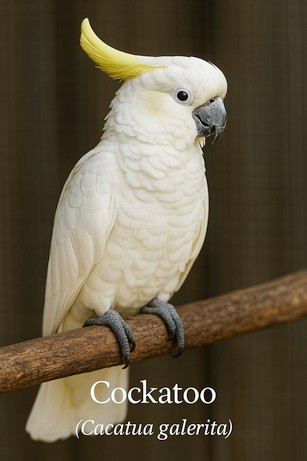
- Colors: Mostly white; some grey, pink, black. Distinctive crests.
Care Requirements
- Cage Size: Extremely large and durable cage or aviary is essential.
- Temperature Range: 18-25°C (64-77°F), avoid drafts.
- Diet: High-quality pellets, fresh vegetables, fruits, some seeds/nuts.
- Social Needs: Extremely high; require hours of daily interaction.
Costs (NZ$)
- Purchase Price: $500 - $2000+ (highly variable)
- Monthly Care: $50 - $100+
- Initial Setup: $600 - $1500+
Image Gallery
Detailed Information
Characteristics & Personality
Cockatoos are a family of large, charismatic parrots known for their impressive crests, intelligence, and affectionate nature. However, they are also among the most demanding of all pet birds. They form incredibly strong bonds with their owners and crave constant attention and interaction. If their complex social and mental needs are not met, they are prone to severe behavioral issues such as screaming, feather plucking, and destructiveness. Cockatoos are playful, inquisitive, and can be very cuddly, but also possess strong wills and can be quite loud.
Positive Traits
- Highly intelligent and trainable
- Can be exceptionally affectionate and form deep bonds
- Many species are good at mimicking speech and sounds
- Very interactive and playful
- Long-lived companions (can be a con if not prepared)
Challenges
- Extremely high need for social interaction and mental stimulation (hours daily)
- Very loud; prone to screaming if bored, stressed, or seeking attention
- Can be highly destructive to toys, cages, and household items if not supervised
- Very long lifespan is a massive commitment (potentially 50-70+ years)
- Susceptible to behavioral problems (feather plucking, aggression) if needs aren't met
- Not suitable for beginner bird owners or apartment living typically
Care Guide
Housing Requirements
A very large, extremely durable cage is an absolute minimum; an aviary is often better. Cockatoos are powerful chewers, so the cage must be made of strong, non-toxic materials with secure locks. Provide a variety of large, sturdy perches of different materials and diameters. A constant supply of destructible toys (wood, leather, cardboard, puzzle toys) is crucial for mental stimulation and to redirect chewing behaviors.
Diet & Nutrition
A formulated pellet diet should form the base (approx. 60-70%). Supplement daily with a wide variety of fresh vegetables (leafy greens, carrots, broccoli, peas) and fruits (apples, bananas, berries – in moderation). Offer a small amount of good quality seed mix and nuts as treats. Avoid avocado, chocolate, caffeine, and alcohol as these are toxic. Fresh, clean water must always be available.
Health & Wellness
Cockatoos are prone to Psittacine Beak and Feather Disease (PBFD), fatty liver disease (often diet-related), obesity, and respiratory infections. Behavioral issues like feather plucking are common if they are stressed, bored, or lonely. Regular check-ups with an experienced avian veterinarian are essential. Maintaining a clean environment, providing a balanced diet, and ensuring ample mental and physical stimulation are key to their health.
Training & Intelligence
Cockatoos are exceptionally intelligent and can learn a wide range of tricks, behaviors, and speech. Training provides vital mental stimulation. Use positive reinforcement techniques (treats, praise). Consistency and patience are key. Early socialization and training are important to manage their strong personalities.
Training Difficulty
High - They are very smart and learn quickly, but can also learn undesirable behaviors. Requires a knowledgeable and consistent trainer.
Speech & Vocalizations
Many cockatoo species are capable of mimicking speech and various sounds. However, all cockatoos are LOUD and will vocalize frequently, including loud contact calls or screams, especially if they are seeking attention or are unhappy.
Buying Guide
Best Time to Buy
The best time to acquire a cockatoo is when you are absolutely certain you can meet their extensive needs for their entire, very long lifespan. This is a decision requiring immense research and preparation.
Where to Buy in Christchurch
- Reputable, experienced breeders who prioritize socialization and health.
- Avian rescue organizations (cockatoos are often relinquished due to their demanding nature).
- Ensure any seller can provide comprehensive health and background information.
What to Look For
- Bright, clear eyes and clean nostrils.
- Smooth, well-kept feathers (no signs of plucking or damage).
- Active, alert, and inquisitive behavior.
- Clean vent area.
- A bird that has been well-socialized and ideally parent-raised or co-parented for a good start.
- Ask about diet, health history, and any known behavioral traits.
Is This Bird Right For You?
Ideal Owner Profile
Cockatoos are ONLY for highly experienced bird owners who can dedicate several hours *every single day* to interaction, training, and play. The ideal owner is patient, extremely tolerant of loud noise and mess, financially stable for high ongoing costs (large toys, vet bills), and prepared for a commitment that can span many decades. They are generally not suitable for families with young children or for apartment dwellers.
Lifestyle Considerations
- Massive time commitment daily for social interaction.
- Ability to provide a very large and constantly enriched environment.
- Tolerance for extremely loud vocalizations.
- Financial resources for large toys, specialized diet, and avian vet care.
- A stable home environment and willingness to make a 50-70+ year commitment.
- Understanding of complex parrot behavior and positive reinforcement training.