Quick Facts
Basic Information
- Scientific Name: Platycercus eximius
- Average Lifespan: 20-25 years (or more)
- Size: Approx. 30 cm (12 inches)
- Weight: Approx. 100-120 grams (4 ounces)
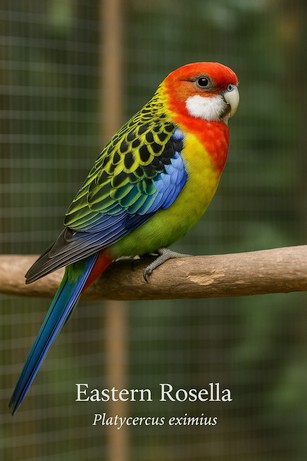
- Colors: Bright red head and chest, white cheeks, yellow body with black scalloping on back and wings, blue flight feathers and tail.
Care Requirements
- Cage Size: Spacious cage or aviary is ideal.
- Temperature Range: Adaptable, but protect from extremes.
- Diet: Quality seed mix, fresh fruits, vegetables, and native grass seeds.
- Social Needs: Can be kept with others of their kind in a large aviary; need regular interaction if kept as a single pet.
Temperament Notes
- Intelligent and playful
- Can be mischievous
- Not typically cuddly, may be nippy if not socialized
- Excellent whistlers, can mimic tunes
- Relatively quiet natural calls
Image Gallery
Detailed Information
Characteristics & Personality
Eastern Rosellas are renowned for their stunningly vibrant plumage and engaging personalities. They are intelligent, active, and playful birds. While not typically a 'cuddly' parrot, a well-socialized Eastern Rosella can become a friendly and entertaining companion, known for its charming whistling abilities and sometimes cheeky demeanor.
Positive Traits
- Strikingly beautiful appearance
- Excellent whistlers, can learn tunes
- Intelligent and curious
- Relatively quiet compared to some larger parrots
- Can be housed in aviaries with their own kind
Challenges
- Not typically fond of handling or petting
- Can be nippy, especially if not well-socialized or during adolescence
- Require consistent interaction to maintain tameness
- Need ample space for flight and activity
Care Guide
Housing Requirements
Eastern Rosellas thrive in spacious environments. A large cage is essential, and an aviary setup is ideal, particularly if keeping multiple birds. They are active and need room to fly. Provide various perches and chewable items like fresh, non-toxic branches.
Diet & Nutrition
In the wild, Eastern Rosellas are ground feeders, consuming grass seeds, herbs, fruits, and insects. In captivity, offer a high-quality small parrot seed mix (containing canary, oats, sunflower seeds) supplemented generously with fresh fruits (apples, pears, berries) and vegetables (carrots, broccoli, leafy greens). Ensure fresh water is always available. They also appreciate opportunities to forage.
Health & Wellness
Generally hardy birds, Eastern Rosellas can be prone to fungal infections and intestinal worms if housed in outdoor aviaries where they forage on the ground; maintaining a clean environment is crucial. Psittacosis is also a potential concern. Regular veterinary check-ups are recommended. They love to bathe, so provide a shallow dish of water for this purpose.
Training & Intelligence
Eastern Rosellas are intelligent birds that can be trained with patience and consistency. They are particularly adept at learning to whistle tunes. While they may pick up a few words, they are not known for extensive vocabularies.
Training Difficulty
Moderate. They are smart but can be independent. Positive reinforcement and regular, short training sessions work best. Hand-raising from a young age greatly helps in bonding and training.
Speech & Mimicry
Excellent whistlers, limited talkers. Their ability to mimic complex melodies is a highlight. Speech is usually minimal.
Is an Eastern Rosella Right for You?
Eastern Rosellas are best suited for owners who appreciate their beauty and whistling ability and are prepared for a bird that may prefer limited physical interaction. They do well with experienced bird owners or those willing to learn and provide consistent socialization.
- Individuals or families who enjoy observing active and intelligent birds.
- Those who can provide a spacious living environment (large cage or aviary).
- Owners who understand that Rosellas are not typically "hands-on" pets like some other parrots.
- People who enjoy a bird that communicates more through whistling than talking.