
Quick Facts
Basic Information
- Scientific Name: Eclectus roratus
- Common Subspecies: Solomon Island, Vosmaeri, Red-sided
- Average Lifespan: 30-40 years (can reach 50)
- Size: 35-42 cm (12-17 inches)
- Weight: 370-550 grams
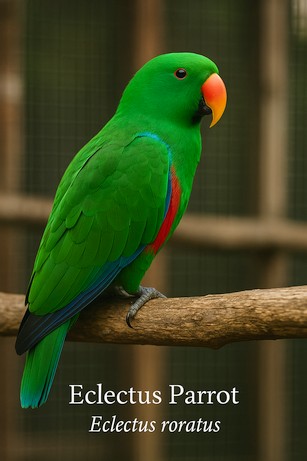
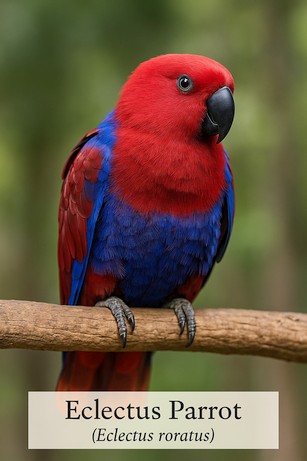
- Appearance: Males: Emerald green, orange/yellow beak. Females: Bright red, blue/purple belly, black beak.
Care Requirements
- Cage Size: Large cage or aviary essential (e.g., min. 90cm W x 60cm D x 120cm H).
- Temperature Range: Room temperature (18-25°C). Prefer calm environment.
- Diet: High fiber, low fat. Primarily fresh fruits (80%), vegetables, sprouts. Limited natural pellets. NO artificial additives.
- Social Needs: Highly social; needs daily interaction and mental stimulation.
Costs (NZ$)
- Purchase Price: $1200 - $3500+ (estimate)
- Monthly Care: $50 - $100+ (fresh diet, toys)
- Initial Setup: $500 - $1000+ (large cage & enrichment)
Image Gallery
Detailed Information
Characteristics & Personality
Eclectus Parrots are renowned for their striking sexual dimorphism – the males are a brilliant emerald green with a candy-corn colored beak, while females are a stunning combination of bright red and deep blue/purple with a black beak. These intelligent birds are generally calm, gentle, and observant. They can form strong bonds with their human companions and are often described as affectionate, though typically not as cuddly as some other parrot species. Eclectus parrots thrive on routine and a calm environment; they can be sensitive to stress and loud noises. Males are often considered more easygoing and trainable, while females can be more independent and may exhibit strong nesting behaviors, sometimes becoming territorial, especially during breeding season.
Positive Traits
- Stunning and unique appearance with dramatic sexual dimorphism
- Highly intelligent and can be excellent talkers
- Generally calm, gentle, and observant nature
- Can form strong bonds with their owners
- Relatively long lifespan
Challenges
- Specific dietary needs (high fiber, low fat, mainly fresh foods)
- Can be sensitive to stress, noise, and changes in routine
- Females can become territorial and assertive, especially around nesting
- Prone to feather plucking or toe-tapping/wing-flipping if stressed or diet is imbalanced
- Require a very large cage and significant daily out-of-cage time
- Can be more expensive to acquire and maintain
Care Guide
Housing Requirements
A very spacious cage or aviary is critical. Minimum cage dimensions for a single Eclectus should be around 90cm wide x 60cm deep x 120cm high, but larger is always significantly better, especially if housing a pair. Aviaries are ideal. The cage should allow for flight and climbing, equipped with multiple perches of varied materials and diameters, swings, and plenty of destructible toys to keep their intelligent minds engaged. They prefer a calm spot in the home, away from constant loud disturbances.
Diet & Nutrition
Eclectus parrots have a specialized digestive system requiring a diet high in fiber and low in fat. Approximately 80% of their diet should consist of fresh fruits (like pomegranate, papaya, figs, apples, berries), vegetables (leafy greens, carrots, sweet potato), and sprouts. High-quality, natural pellets formulated for Eclectus (free of artificial colors, preservatives, and excessive vitamins) should make up a small portion of the diet. Nuts and seeds should be given very sparingly as treats. Avoid vitamin and mineral over-supplementation, as this can lead to health issues like toe-tapping. Ensure fresh water is always available.
Health & Wellness
Eclectus parrots are prone to stress-related behaviors like feather plucking and specific conditions like toe-tapping or wing-flipping, which can be linked to dietary imbalances (especially over-fortification) or stress. They can also be susceptible to fatty liver disease if their diet is too high in fat. Maintaining a calm environment, providing the correct diet, and ensuring ample mental stimulation are key to their health. Regular bathing or misting is beneficial for their feather and skin health. Annual check-ups with an avian veterinarian experienced with Eclectus parrots are recommended.
Training & Intelligence
Eclectus parrots are highly intelligent and can be excellent talkers, often developing clear speech and extensive vocabularies. They learn routines quickly and respond well to positive reinforcement training methods. Training sessions should be kept engaging and consistent. Their intelligence also means they require significant mental stimulation to prevent boredom.
Training Difficulty
Moderate - They are intelligent and learn well, but can be sensitive. Males are often reported as being more readily trainable than females, who can be more independent-minded.
Speech & Vocalizations
Many Eclectus parrots are gifted mimics and can develop impressive vocabularies, sometimes speaking with surprising clarity. While generally not as consistently noisy as some other large parrots, they have a range of vocalizations, including distinct honks, squawks, and chortles, which can be loud at times.
Buying Guide
Best Time to Buy
Acquiring a young, well-socialized Eclectus from a reputable breeder is ideal. Ensure you are prepared for their long lifespan and specific care requirements before committing.
Where to Buy in Christchurch
- Specialist avian breeders who understand Eclectus dietary and environmental needs.
- Christchurch Bird Club may offer contacts for reputable local breeders.
- Inquire about the bird's lineage (to avoid unknowingly getting a hybrid of subspecies if purity is desired for breeding).
- Prioritize breeders who focus on health, diet, and socialization.
What to Look For
- Bright, clear eyes and clean nostrils.
- Smooth, vibrant feathers (appropriate color for sex) with no signs of plucking or stress bars.
- Active, alert, and curious demeanor.
- Clean vent and healthy-looking feet.
- Ask about the current diet and observe the bird's interaction with its environment.
Is This Bird Right For You?
Ideal Owner Profile
Eclectus Parrots are best suited for experienced bird owners, or dedicated beginners willing to extensively research and provide for their unique needs. The ideal owner can offer a calm, stable environment, commit to preparing a fresh and varied diet daily, and spend quality time interacting with the bird. Patience and an understanding of their sensitive nature are crucial.
Lifestyle Considerations
- Significant time commitment for diet preparation, interaction, and out-of-cage time.
- Ability to provide a very large and enriching cage/aviary.
- Preference for a quieter, observant companion rather than a highly boisterous one (though they can be loud).
- Willingness to manage potential hormonal behaviors, especially in females.
- Financial stability for high-quality fresh food, large housing, and specialized avian vet care.
- A long-term commitment of 30-50 years.
- A calm household without excessive loud noises or frantic activity.