
Quick Facts
Basic Information
- Scientific Name: Cyanoramphus novaezelandiae
- Average Lifespan: 12-15 years (up to 20)
- Size: 25-28 cm (10-11 inches)
- Weight: 50-65 grams
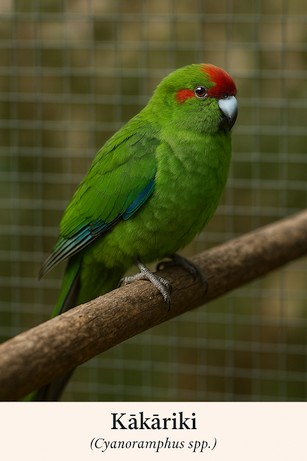
- Colors: Green body, red crown & eye stripes, blue on wings. Mutations: yellow, pied, blue, cinnamon.
Care Requirements
- Cage Size: Large cage essential (e.g., 90cm L x 60cm W x 90cm H or larger). Bar spacing ~1.25cm.
- Temperature Range: Room temperature (18-25°C).
- Diet: Pellets, fresh vegetables & fruits, small amount of seeds. Enjoys foraging.
- Social Needs: Social; needs interaction with owner or a Kakariki companion.
Costs (NZ$)
- Purchase Price: $80 - $200 (estimate)
- Monthly Care: $20 - $40 (estimate)
- Initial Setup: $150 - $300 (estimate)
Image Gallery
Detailed Information
Characteristics & Personality
Kakariki, meaning "small parrot" in Māori, are native New Zealand parakeets celebrated for their incredibly high energy levels, boundless curiosity, and playful antics. The Red-crowned Kakariki is the species most commonly kept in aviculture. They are constantly on the move, exploring every nook and cranny, and amusing their owners with their acrobatic feats and chattering calls. Kakariki are intelligent and can form strong bonds with their human companions, enjoying interaction and play. While not as loud as some larger parrots, they have a range of vocalizations including chatters, whistles, and the occasional screech when excited.
Positive Traits
- Extremely energetic, playful, and entertaining
- Intelligent and can learn some words or tricks
- Relatively easy to care for, suitable for attentive beginners
- Can form strong bonds with owners
- Moderate noise level compared to many parrots
Challenges
- Require a very large cage due to their high activity levels
- Need significant out-of-cage time and environmental enrichment
- Can be escape artists; secure cage latches are a must
- Prone to chewing; provide plenty of appropriate toys
- May be nippy if not well-socialized or if feeling threatened
Care Guide
Housing Requirements
Due to their hyperactive nature, Kakariki need the largest cage you can possibly provide. A flight cage or aviary-style setup is ideal, allowing them space to fly, climb, and explore. Minimum dimensions for a very active bird could be 90cm L x 60cm W x 90cm H, but bigger is always better. Bar spacing should be around 1.25cm (1/2 inch). Furnish the cage with numerous natural perches of varying thicknesses, swings, ladders, and a wide array of destructible toys. Kakariki love to bathe, so a shallow dish of water should be offered daily.
Diet & Nutrition
A varied and balanced diet is key. Start with a base of high-quality pellets. Supplement this daily with a generous offering of fresh vegetables (leafy greens, carrots, broccoli, peas, corn) and some fruits (apples, berries, pear – in moderation due to sugar content). A small amount of a good seed mix can be offered, but avoid over-reliance on seeds. Kakariki are natural foragers, so providing food in puzzle toys or scattering it can offer great mental stimulation.
Health & Wellness
Kakariki are generally robust birds. Key to their health is a spacious, clean environment, a nutritious diet, and ample opportunities for exercise and mental stimulation. They can be prone to stress if confined or bored. Regular bathing helps maintain feather condition. As with all parrots, be vigilant for signs of illness and consult an avian veterinarian for any concerns.
Training & Intelligence
Kakariki are intelligent and quick learners. They respond well to positive reinforcement training techniques. They can be taught to step up, come when called, and may learn simple tricks. Their curiosity makes them engaging pupils.
Training Difficulty
Moderate – Their intelligence is an advantage, but their high energy can sometimes mean a shorter attention span. Keep training sessions short, fun, and rewarding.
Speech & Vocalizations
Kakariki can learn to mimic some words and phrases, though they are not considered prolific talkers like some other parrot species. Their natural vocalizations include a variety of chatters, whistles, and some screeches, generally at a moderate volume.
Buying Guide
Best Time to Buy
Young, hand-reared Kakariki are generally easier to tame and bond with. Look for birds that have recently fledged and are independently feeding.
Where to Buy in Christchurch
- Reputable breeders who can provide information about the bird's background and health.
- Christchurch Bird Club members often have Kakariki and can offer advice.
- Avoid purchasing from sources where birds appear overcrowded or in poor condition.
What to Look For
- An active, alert, and inquisitive bird.
- Bright, clear eyes and clean nostrils.
- Smooth, well-groomed feathers (no signs of plucking or excessive dirt).
- The bird should move around confidently and not appear overly fearful.
- If possible, observe the bird interacting with its environment and any cagemates.
Is This Bird Right For You?
Ideal Owner Profile
Kakariki are perfect for owners who delight in a highly active, playful, and curious small parrot. They thrive in an environment where they receive plenty of interaction, mental stimulation, and space to expend their considerable energy. They are well-suited to individuals or families prepared for their lively nature.
Lifestyle Considerations
- Ability to provide a very large cage or aviary setup.
- Commitment to daily out-of-cage time for exercise and interaction.
- Enjoys an interactive and engaging pet.
- Tolerant of some chewing (must provide lots of chew toys).
- Prepared for a commitment of 12-15+ years.
- Patient with training and socialization.