Quick Facts
Basic Information
- Common Names: Quaker Parrot, Monk Parakeet
- Scientific Name: Myiopsitta monachus
- Average Lifespan: 20-30 years
- Size: Approx. 28-30 cm (11-12 inches)
- Weight: Approx. 90-140 grams
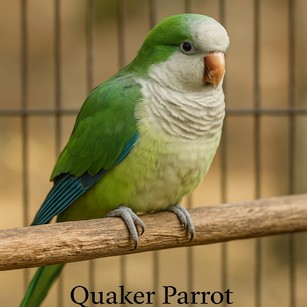
- Appearance: Bright green body, greyish breast, cheeks and throat. Blue flight feathers. Beak is typically horn-colored or pale orange. Various color mutations exist (e.g., blue, lutino).
Care Requirements
- Cage Size: Spacious; min. 45cm W x 45cm D x 55cm H, but larger is highly recommended. Secure locks.
- Temperature Range: Room temperature (18-25°C). Hardy but avoid drafts.
- Diet: High-quality pellets, fresh fruits, vegetables. Limited seeds and nuts.
- Social Needs: Highly social; requires daily interaction and mental stimulation. Can be kept singly if given enough attention, or in pairs.
Costs (NZ$)
- Purchase Price: $400 - $1000+ (estimate, depends on color/breeder)
- Monthly Care: $30 - $60+ (quality food, toys)
- Initial Setup: $200 - $500+ (cage, enrichment)
Image Gallery
Detailed Information
Characteristics & Personality
Quaker Parrots are confident, social, and bold little birds, often described as having a "big bird" personality in a small package. They are known for their intelligence, comical antics, and chatty nature, bonding closely with their human companions. Quakers can be quite territorial about their cage and may exhibit "cage aggression" if not managed with consistent training and respect for their space. They are unique among parrots for their ability to build elaborate stick nests, even in captivity, often using any materials they can find. This nesting instinct is very strong.
Positive Traits
- Highly intelligent and quick learners
- Excellent talking ability for their size
- Very social and form strong bonds with owners
- Playful, comical, and entertaining
- Relatively hardy birds
- Unique nest-building behavior is fascinating to observe
Challenges
- Can be prone to cage territoriality and aggression if not handled appropriately
- Can be quite noisy with frequent chattering and occasional loud squawks
- Require consistent interaction and mental stimulation to prevent boredom
- Strong nesting instinct may lead them to try and build nests in undesirable locations
- Chewing can be an issue if not provided with appropriate toys
- Legal status varies in some parts of the world due to invasive potential (though generally kept as pets in NZ).
Care Guide
Housing Requirements
A spacious cage is essential. While a minimum might be 45cm x 45cm x 55cm, a much larger cage is always better to accommodate their active nature and provide space for toys and perches. Bar spacing should be appropriate for their size (e.g., 1/2 to 5/8 inch). Quakers are clever, so secure cage locks are a must. Provide a variety of perches and plenty of destructible toys. Some owners provide safe, bird-friendly materials for them to satisfy their nesting urges, like willow branches or paper strips, within a designated area or a special nesting box.
Diet & Nutrition
A balanced diet is key. A good quality pelleted diet should form the base (60-70%). Supplement daily with a variety of fresh vegetables (leafy greens, carrots, peas, corn) and fruits (apples, berries, melon) in moderation. A small amount of good quality seed mix and nuts can be offered as treats. Avoid a primarily seed-based diet. Fresh, clean water must always be available. Quaker parrots can be prone to obesity and fatty liver disease, so a healthy diet is crucial.
Health & Wellness
Quakers are generally hardy birds. However, they are prone to obesity and fatty liver disease if their diet is too high in fat and they lack exercise. Feather plucking can occur if they are bored, stressed, or lack social interaction. Regular mental stimulation, a balanced diet, a clean environment, and opportunities for out-of-cage exercise are important for their overall health. Regular check-ups with an avian veterinarian are recommended.
Training & Intelligence
Quaker Parrots are highly intelligent and can be trained to do tricks and talk. They learn quickly and respond well to positive reinforcement. Consistent training from a young age can help manage their territorial tendencies. Their intelligence means they need ongoing mental challenges to stay happy.
Training Difficulty
Moderate. Their intelligence aids learning, but their bold and sometimes stubborn nature requires patience and consistency. Early socialization and handling are key to a well-adjusted pet.
Speech & Vocalizations
Quakers are renowned for their talking ability, often learning many words and phrases with surprising clarity for their size. They are also quite vocal, with a range of chatters, chirps, and sometimes loud squawks, especially when excited or seeking attention.
Buying Guide
Best Time to Buy
Young, hand-reared Quaker Parrots typically make the best pets as they are more likely to be well-socialized and tame. Ensure you are prepared for their specific needs before purchasing.
Where to Buy in Christchurch
- Reputable bird breeders who specialize in Quakers and focus on early socialization.
- Members of the Christchurch Bird Club may have birds available or can offer breeder recommendations.
- Ensure the seller can provide information about the bird's health, age, and upbringing.
What to Look For
- An active, alert bird with bright, clear eyes.
- Clean nostrils and vent area.
- Smooth, well-kept feathers (no signs of plucking or excessive soiling).
- The bird should appear curious and engage with its surroundings.
- Look for signs of good socialization; the bird should not be overly fearful or aggressive (though some initial shyness is normal).
Is This Bird Right For You?
Ideal Owner Profile
Quaker Parrots are suited for owners who can provide consistent daily interaction, mental stimulation, and are understanding of their potential for territorial behavior. They are a good match for those who appreciate an intelligent, chatty, and engaging companion and are prepared to manage their unique needs with patience and positive training methods.
Lifestyle Considerations
- Willingness to spend daily quality time interacting with the bird.
- Ability to provide a spacious and enriching cage environment.
- Patience and consistency in training to manage territoriality.
- Tolerance for noise (chattering, squawking).
- Understanding of their strong nesting instincts and willingness to provide appropriate outlets.
- Commitment for a lifespan of 20-30 years.