Quick Facts
Basic Information
- Common Names: Rainbow Lorikeet, Lory, Rainbow Bird
- Scientific Name: Trichoglossus moluccanus (or T. haematodus moluccanus)
- Average Lifespan: 15-25 years (can live up to 30)
- Size: 25-30 cm (10-12 inches)
- Weight: 70-160 grams
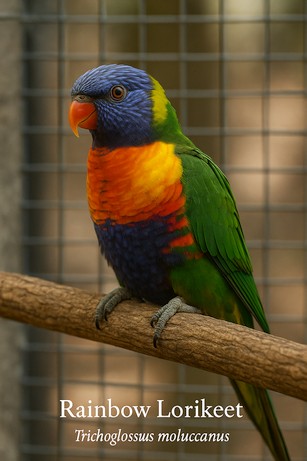
- Colors: Deep blue head and belly, green back/wings, red breast with yellow/orange highlights, red beak.
Care Requirements
- Cage Size: Large flight cage/aviary (e.g., min. 120cm L x 60cm W x 90cm H). Metal construction.
- Temperature Range: Room temperature (18-25°C), avoid drafts.
- Diet: Specialized nectar diet (commercial/homemade). Supplement with fruits (apple, pear, melon), edible flowers (eucalyptus, bottlebrush), some vegetables. NO seeds/pellets.
- Social Needs: Highly social; needs daily interaction or a companion.
Costs (NZ$)
- Purchase Price: $200 - $600+ (estimate, depends on breeder/age)
- Monthly Care: $40 - $80+ (specialized diet can be costly)
- Initial Setup: $300 - $700+ (large cage, toys)
Image Gallery
Detailed Information
Characteristics & Personality
Rainbow Lorikeets are exceptionally vibrant parrots, both in appearance and personality. They are renowned for their playful, comical antics, intelligence, and affectionate nature towards their human companions. These birds are energetic busybodies, always exploring and eager to be part of the action. While generally friendly and social, they can exhibit territorial behavior, especially with other birds, including their own species. They are not shy and will readily communicate their needs, often through a variety of vocalizations.
Positive Traits
- Stunningly beautiful and colorful plumage
- Highly intelligent and can be excellent talkers
- Very playful, active, and entertaining
- Can form strong bonds and be very affectionate
- Relatively long-lived companions
Challenges
- Specialized nectar-based diet which is messy and requires frequent preparation
- Can be very noisy with frequent, high-pitched squawks
- Require a very large cage or aviary and lots of out-of-cage time
- Can be territorial and jealous, potentially aggressive with other birds
- Messy droppings due to liquid diet require diligent cleaning
- Considered an Unwanted Organism in NZ; must be securely housed
Care Guide
Housing Requirements
A spacious flight cage or aviary is absolutely essential for these active birds. A minimum cage size might be 120cm L x 60cm W x 90cm H, but much larger is strongly recommended. The cage must be made of sturdy metal, as their beaks can damage wood. Provide plenty of perches of varying diameters, swings, and durable toys. Due to their liquid diet, their droppings are messy; choose a cage location where floors and walls can be easily cleaned (plastic sheeting on walls can help).
Diet & Nutrition
Rainbow Lorikeets have a unique brush-tipped tongue adapted for feeding on nectar and pollen. They CANNOT eat seeds or pellets. Their primary diet must be a high-quality commercial lorikeet nectar mix (wet or dry, prepared fresh 2-3 times daily) or a carefully balanced homemade nectar. Supplement with fresh fruits like apple, pear, melon, and berries, as well as edible native flowers such as eucalyptus, grevillea, and bottlebrush. Small amounts of certain green vegetables can also be offered. Avoid citrus fruits, avocado, chocolate, and rhubarb. Food and water dishes must be cleaned meticulously (ideally within two hours of feeding for nectar) to prevent bacterial growth.
Health & Wellness
Cleanliness is paramount due to their diet. They are susceptible to "sour crop" (a bacterial infection) if food is not fresh. "Lorikeet Paralysis Syndrome" is another concern, though its exact cause is unknown. Like many intelligent birds, they can resort to feather plucking if bored or neglected. Regular bathing is enjoyed and helps feather condition. An avian vet experienced with lorikeets is recommended for check-ups.
Training & Intelligence
Rainbow Lorikeets are highly intelligent and capable learners. They can be taught tricks and many become proficient talkers, learning numerous words and phrases. Positive reinforcement methods work best. Their intelligence also means they can be escape artists, so secure cage locks are a must.
Training Difficulty
Moderate to High - Their intelligence is a plus, but they require consistent engagement. They can learn quickly, including undesirable behaviors if not guided.
Speech & Vocalizations
Many Rainbow Lorikeets are excellent talkers. However, they are also very vocal birds with frequent, loud, and sometimes shrill squawks and chatters. They are not a quiet pet and may not be suitable for apartment living or noise-sensitive households.
Buying Guide
Best Time to Buy
Young, hand-reared birds generally adapt better as pets and are easier to socialize. Ensure you are fully prepared for their specialized care needs before acquiring one.
Where to Buy in Christchurch
- Reputable breeders specializing in lorikeets are the best source.
- Christchurch Bird Club members may be able to provide breeder contacts or advice.
- Ensure the seller can provide information on the bird's health and diet.
- Be aware of their status as an Unwanted Organism in NZ; they must be kept securely to prevent escape.
What to Look For
- Bright, clear eyes and clean nostrils.
- Smooth, vibrant feathers with no signs of plucking.
- Active, alert, and curious behavior.
- Clean vent area.
- Evidence of being fed an appropriate nectar-based diet.
Is This Bird Right For You?
Ideal Owner Profile
Rainbow Lorikeets are for dedicated bird enthusiasts who can commit significant time to their care, including daily food preparation, rigorous cleaning, and extensive social interaction. Owners must be tolerant of noise and mess. They are not low-maintenance pets and require a deep understanding of their unique needs.
Lifestyle Considerations
- Ability to provide a very large, secure cage/aviary and safe out-of-cage playtime.
- Commitment to preparing specialized nectar diet multiple times a day.
- High tolerance for loud vocalizations and messy environment.
- Time for daily interaction, training, and enrichment.
- Financial resources for potentially expensive diet, large housing, and avian vet care.
- Understanding of their legal status in NZ and commitment to responsible ownership.
- Long lifespan commitment (15-25+ years).